 Introducing our BRAND NEW brePRINT.
  7 Min Read
 Kelly Mills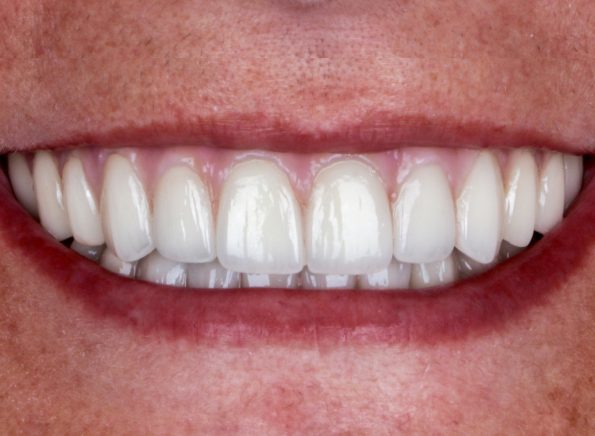
Nowadays, patients are not merely concerned with the function of their prostheses; they also aspire to natural-looking aesthetics and seek treatments that will deliver fixed, durable and predictable outcomes. Immediate placement and loading of dental implants offer many advantages including savings of time and cost, enhanced aesthetics and occlusal function, and the preservation of residual alveolar ridge. The procedure also means patients can avoid the need to wear temporary removable prostheses or undergo secondary surgical procedures.
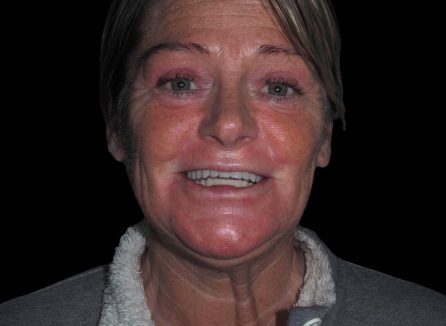
The following case report demonstrates the successful management of a 53-year-old lady whose dentition had been severely compromised due to periodontal disease.
Her expectations were met with treatment to stabilise the periodontitis, and implant-supported prosthetic rehabilitation of the upper and lower arches to restore function and aesthetics. The report describes the treatment of maxillary and mandibular immediate implant placement and delivery of immediately loaded implant-supported provisional complete fixed dental prostheses, carried out with a full digital workflow.
The treatment was made possible with bredent medical blueSKY implants, SKY pro guide surgical kit, the SKY fast & fixed same-day-teeth system and the SKY pro guide plan to achieve the desired prosthetically driven implant placement. The case was supported by colleagues at Impact Dental and Implant Laboratory, Bolton, Greater Manchester.
Case assessment
A patient with advanced periodontal disease was referred to Renovo Dental to explore options to address her oral health concerns. For as long as she could remember, she had been embarrassed by the appearance of her mouth and was seeking an affordable long-term, predictable, fixed option with improved aesthetics.
Her ongoing struggles with loose teeth, highly visible gaps and the resulting food packing had significantly hindered her ability to eat and smile confidently. She expressed her wish for replacement of her failing dentition with fixed prostheses and was emphatic about her inability to tolerate traditional, removable complete dentures during any phase of the treatment.
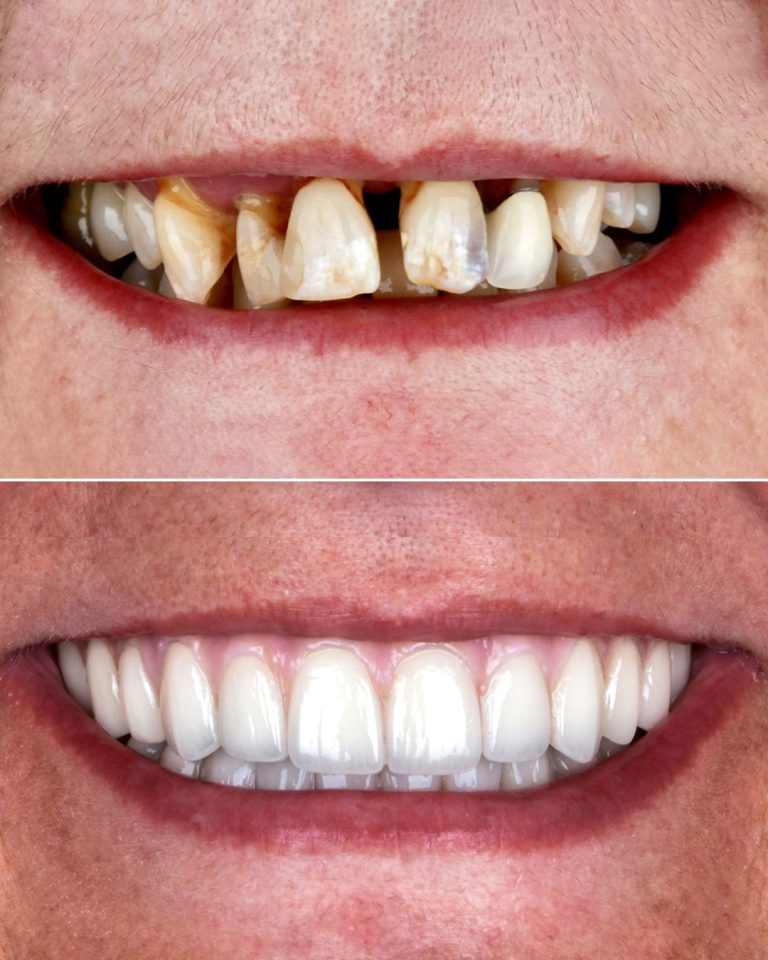
The intraoral examination revealed significant interdental bone loss in both the upper and lower jaws (Figures 1 to 3). Radiographic assessment showed moderate bone resorption on the anterior teeth (Figure 4). Our assessment also noted the patient’s moderate chronic generalised periodontitis (Figures 5 to 7), a canted occlusal plane, occlusion disharmony, extrusion of the remaining mandibular anterior teeth and recurrent dental caries. Endodontic retreatment was also needed on several teeth.
Treatment planning
Treatment options were discussed with the patient, who consented to a plan including maxillary and mandibular implant-supported complete fixed dental prostheses. The patient’s remaining teeth would be extracted, and simultaneous maxillary and mandibular immediate implant placement would be performed with bredent medical blueSKY bone level implants, aided by static computer-aided implant surgery (s-CAIS). Immediately loaded implant-supported provisional complete fixed dental prostheses would be provided, enabling the patient to leave the surgery with functional and aesthetic temporary teeth during the healing period.
The chosen treatment plan met the patient’s expectations for restoration of the pink aesthetics and was felt to be the optimum approach to mitigate further bone loss. The agreed plan was as follows:
- Full-mouth scaling and root planing to manage the periodontal disease
- Strict oral hygiene instructions for the patient to carry out at home for a twelve-week period
- Intraoral scanning followed by extraction of remaining maxillary and mandibular teeth
- Prosthetic and aesthetic analysis using software including the SKY pro guide plan
- Preparation of immediate maxillary and mandibular full-arch prostheses
- Preparation of implant surgical guide
- Immediate implant placement of twelve bredent medical blueSKY implants with minimal bone augmentation in the UR4 buccal site, assisted by the bredent medical SKY pro guide surgical kit and SKY fast & fixed same-day teeth system
- Immediate loading of implants with temporary screw-retained polymethyl methacrylate (PMMA) milled bridges on bredent medical uni.cone abutments
- Fitting of final monolithic zirconia, screw-retained full-arch restorations on titanium frameworks, with definitive prostheses created from Luxor Z True Nature zirconia teeth
- Continued periodontal supportive therapy every three to four months
Implant planning and digital workflow
During the planning phase, a virtual wax-up was created to optimise load distribution and aesthetics for the prosthetically driven implant placement. The SKY fast & fixed protocol, supported with SKY pro guide implant planning software, ensured ideal implant position and angulation for immediate loading (Figures 8 and 9).
On the day of surgery, the patient’s failing upper and lower arch teeth were extracted and bredent medical HELBO antimicrobial photodynamic therapy (aPDT) was used to disinfect the extraction sockets, with interaction of a photosensitive dye and low-energy exposure from the TheraLite laser.
Twelve implants were then placed with the SKY pro guide surgical kit. Two 5.5mm by 8mm implants were placed in the UR7 and UL7, three 4mm by 14mm implants were placed in the UR4, UR2 and UL4, and a 4mm by 12mm implant was placed in the UL2. In the lower arch, four 4mm by 12mm implants were placed in the LR4, LR2, LL2 and LL4, with 5.5mm by 8mm implants inserted into the LR6 and LL6 regions. Bone contouring, or osteotomy, in the lower jaw was carried out prior to implant placement although there was no need to remove bone from the maxilla.
The milled PMMA temporary bridges were digitally planned for chairside delivery (Figures 10 to 12). The implant pick-up technique was employed with bredent medical Qu-resin in a tension-free procedure.
Osseointegration and definitive restoration
Three months after implant placement, osseointegration was achieved in all the implant sites and there was sufficient buccal keratinised soft tissue seal, which plays a crucial role in ensuring the long-term stability of the soft tissues and facilitating proper oral hygiene maintenance. The postoperative OPG scan revealed good implant integration (Figure 13), confirming the successful implant placement position and angle for the restoratively driven approach.
The patient returned 18 weeks after surgery for capture of the data for the final prostheses. Fitting of the definitive zirconia screw-retained restorations took place two weeks later (Figures 14 to 16). Since advanced vertical bone defects require prosthetic gingiva, the aesthetics were completed with zirconia and pink ceramics. The patient continues to be monitored and supported with ongoing therapy to manage her periodontal condition.
Aesthetic implant-supported restoration
The challenges presented by significant functional and aesthetic impairments in severely compromised dentition can be overcome by rigorous periodontal disease management, careful selection of products and equipment, and adoption of appropriate implant protocols as part of a multidisciplinary approach.
Highly aesthetic and functional fixed prostheses were delivered for this very appreciative lady with an immediate, implant-supported, digitally planned rehabilitation (Figure 17). The combination of the bredent medical blueSKY implant design facilitating high primary stability, the SKY fast & fixed same-day-teeth system and the SKY pro guide plan, delivered a very predictable and efficient workflow benefitting the patient, implant surgeon and referring dentist alike.
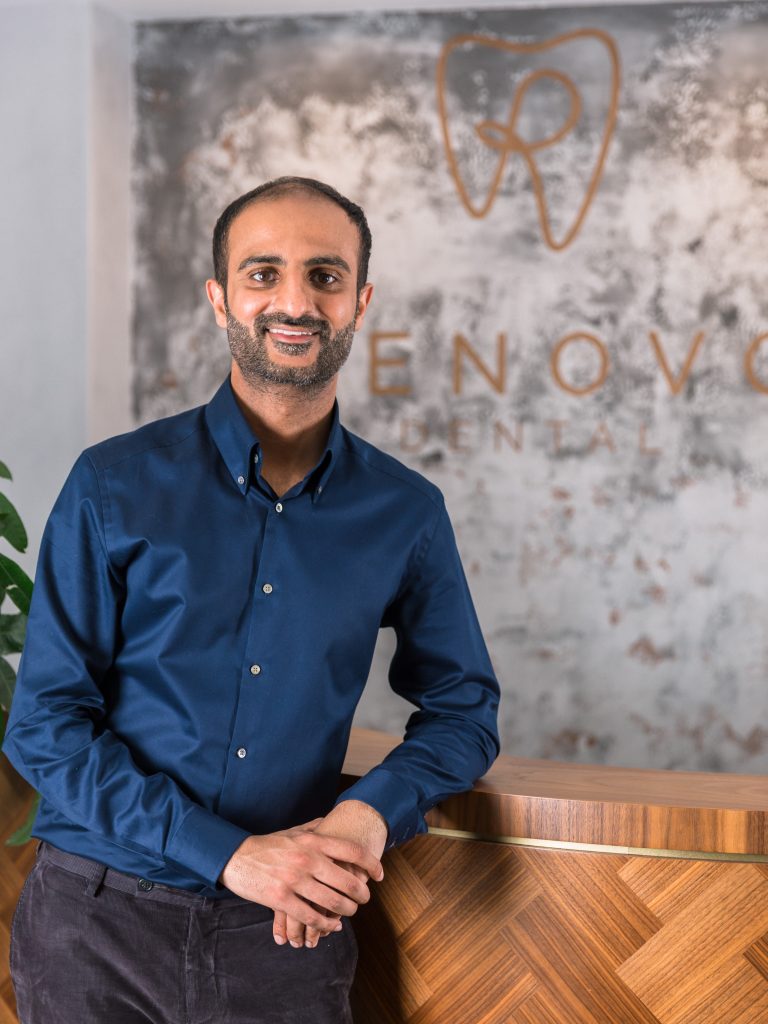
About the author: Dr Usman Riaz BDS MFDS RCSEd Dip Imp Dent RCSEd Dental Sedation and Pain Management PG Cert (UCL, London)
Usman Riaz is the clinical director at Renovo Dental. He has several years’ experience in implant, aesthetic and restorative dentistry. He was awarded the prestigious Diploma in Implant Dentistry by the Royal College of Surgeons, Edinburgh in 2017 and holds a postgraduate certificate in Dental Sedation and Pain Management from UCL Eastman Dental Institute. Usman is a clinical mentor to master’s students at the ICE Dental Institute and Hospital in Manchester. He qualified from the University of Manchester Dental School in 2009.
For further information:
Write to:
Renovo Dental
Pendle House
Clitheroe Road
Clitheroe, BB7 4JY
Tel: 01200 441000
Email: hello@renovodental.co.uk
Or visit: www.renovodental.co.uk